
For many farm owners, agricultural businesses, and small construction contractors, choosing between a wheel loader and an agricultural tractor can be challenging. Both machines are highly versatile off-road equipment designed to improve productivity, but they serve very different purposes. Selecting the wrong machine can lead to lower operational efficiency, increased labor costs, and unnecessary equipment investment.
As a professional manufacturer of wheel loaders and agricultural tractors, Raiso Machinery helps customers worldwide identify the right equipment for their specific applications. This detailed wheel loader vs agricultural tractor comparison explains the key differences in functionality, performance, working scenarios, and return on investment, helping you make a smarter purchasing decision for farming, land development, and construction projects.
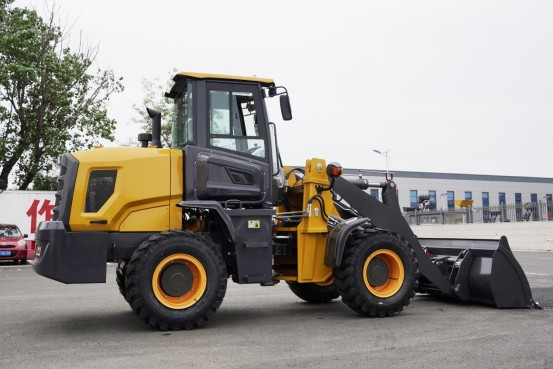
1. Core Functional Positioning Difference
The most significant difference between a wheel loader and an agricultural tractor lies in their primary purpose and design philosophy.
A Raiso wheel loader is specifically engineered for loading, lifting, transporting, and stacking bulk materials. Equipped with a heavy-duty hydraulic lifting system, reinforced loader arms, and a high-capacity bucket, wheel loaders excel at handling
sand, gravel, soil, grain, fertilizers, feed, and other loose materials. Their powerful hydraulic breakout force enables efficient loading operations even in demanding working environments.
Modern wheel loaders can also be equipped with a variety of attachments, allowing them to perform additional tasks such as land leveling, snow removal, light excavation, and material transportation. This versatility makes them valuable equipment for farms, construction sites, warehouses, and industrial yards.
In contrast, an agricultural tractor is primarily designed as a power source for farming implements. A Raiso agricultural tractor delivers reliable traction and PTO power to support plowing, rotary tillage, seeding, fertilizing, spraying, harvesting, and transportation operations. Unlike wheel loaders, tractors focus on continuous pulling power and operational endurance rather than material handling capacity.
For users whose daily work revolves around field cultivation and crop production, tractors remain the foundation of efficient agricultural operations.
2. Applicable Working Scenarios
Understanding the intended working environment is essential when comparing a wheel loader and a tractor.
A Raiso wheel loader performs exceptionally well in applications involving frequent loading and material handling. It is widely used for grain loading and stacking, feed transportation, soil movement, farmland cleaning, road maintenance, landscaping projects, and construction material handling. Farms that regularly move bulk materials can significantly increase productivity by using a compact wheel loader instead of relying on manual labor or tractor-mounted loaders.
In addition to agricultural use, wheel loaders are commonly found in construction projects, municipal engineering work, mining operations, and industrial facilities where high loading efficiency is critical.
Meanwhile, a Raiso farm tractor is best suited for traditional agricultural operations. It excels in plowing fields, rotary tillage, planting, fertilizing, harvesting crops, orchard management, and long-distance transportation of agricultural products. Tractors can connect to numerous implements, making them one of the most versatile machines in modern farming.
However, when it comes to large-scale shoveling, loading trucks, or handling bulk materials, tractors cannot match the efficiency and durability of a dedicated wheel loader.
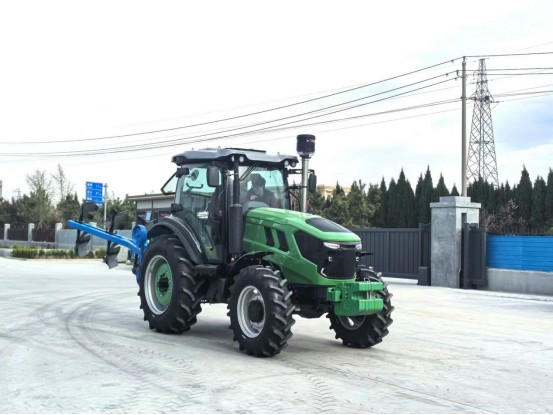
3. Power & Operational Performance
The operational characteristics of these two machines further highlight their different purposes.
A Raiso wheel loader utilizes a high-performance hydraulic system designed for demanding loading tasks. Its powerful breakout force, lifting capacity, and articulated steering structure enable efficient operation even under heavy loads. The articulated frame design provides excellent maneuverability on rough terrain, while reinforced components and wear-resistant tires support continuous high-intensity workloads.
For farms handling grain, silage, soil, or construction materials on a daily basis, a wheel loader delivers faster cycle times and greater operational efficiency.
By comparison, a Raiso agricultural tractor emphasizes stable and continuous power output. Its engine and transmission system are optimized for long working hours, ensuring reliable traction performance with lower fuel consumption. The lighter chassis design allows tractors to move efficiently across farmland while minimizing soil compaction.
Although tractors feature hydraulic lifting systems for implements, these systems are not intended for sustained heavy-duty loading operations. As a result, tractors are more effective in cultivation tasks than in intensive material handling applications.
4. Cost & ROI Comparison
Investment cost and long-term return on investment are important considerations for every equipment buyer.
Generally, agricultural tractors have lower purchase prices, reduced maintenance requirements, and lower daily fuel consumption. For small and medium-sized farms focused primarily on cultivation, planting, and harvesting activities, a tractor often provides the most economical solution.
On the other hand, a Raiso wheel loader requires a higher initial investment but delivers significantly greater productivity in loading and earthmoving applications. Farms involved in grain storage, livestock operations, feed handling, land development, or construction-related work often recover their investment more quickly due to reduced labor costs and improved operational efficiency.
When material handling represents a major portion of daily operations, the productivity advantages of a wheel loader can generate substantial long-term returns.
FAQ for Machine Selection
Q1: Can a tractor replace a wheel loader for grain loading?
While a tractor equipped with a front loader attachment can perform occasional grain loading tasks, its efficiency remains limited compared to a dedicated wheel loader. For large-scale grain storage, truck loading, or bulk material handling, a Raiso wheel loader offers higher loading capacity, faster cycle times, and superior durability.
Q2: Which machine is better for farm land leveling?
The answer depends on the scope of the project. For large-scale land clearing, soil movement, and rough grading, a wheel loader provides stronger pushing and loading capabilities. For precision cultivation and final field preparation, a Raiso tractor equipped with suitable implements is often the better choice.
Q3: Is a wheel loader worth buying for small farms?
If your farm regularly performs grain handling, soil transportation, manure management, feed loading, or infrastructure maintenance, investing in a compact Raiso wheel loader can greatly improve productivity and reduce labor costs. However, if your primary activities involve cultivation, planting, and harvesting, an agricultural tractor will generally deliver better value.
Related Products
Welcome to contact us by leaving a message. We will get in touch with you as soon as we receive your message