
In the export market, overseas customers focus not only on engine performance and overall specifications, but also on the durability and long-term reliability of cab structures. To meet the demands of diverse and challenging working environments worldwide, RAISO tractor cab roof is manufactured using rotational molding technology, offering clear advantages in strength, durability, and appearance consistency.
1. One-Piece Rotational Molding for Superior Structural Stability
Compared with traditional welded steel cab roofs or assembled plastic roofs, the rotationally molded cab roof is formed as a single integrated component, with no welds or joints. This eliminates the risk of cracking, water leakage, or structural fatigue caused by welded seams or fasteners. The uniform wall thickness ensures balanced stress distribution, maintaining excellent stability under long-term vibration and rough working conditions.
2. Outstanding Impact Resistance and Aging Performance
Rotational molding materials provide excellent toughness and flexibility, allowing the cab roof to withstand impacts without cracking, even under extreme temperature variations. Compared with conventional injection-molded plastic or thin metal roofs, the rotationally molded cab roof offers superior impact resistance and UV aging resistance, making it particularly suitable for long-term outdoor operation in high-temperature and high-sunlight regions.
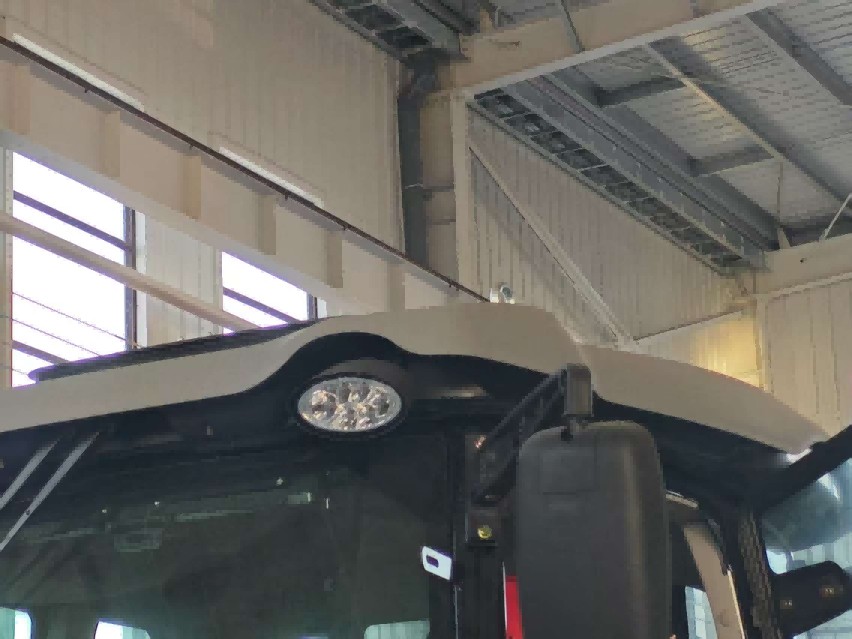
3. Waterproof, Corrosion-Free, and Adapted to Harsh Environments
Unlike steel roofs that are prone to rust in humid or corrosive environments, the rotationally molded cab roof features a fully plastic, corrosion-resistant structure that will not rust or peel. The seamless one-piece design significantly improves waterproof performance, effectively preventing rainwater penetration and enhancing operator comfort and safety.
4. Consistent Appearance and Greater Customization Flexibility
Color is integrated directly into the raw material during the rotational molding process, resulting in a uniform and long-lasting finish that resists fading. Compared with painted steel roofs, this ensures better appearance consistency across large export batches. In addition, the design allows flexible color and structure customization to meet the branding and configuration requirements of different markets.
5. Lightweight Design with Lower Maintenance Costs
While maintaining excellent structural strength, the rotationally molded cab roof is lighter than traditional steel roofs, helping reduce overall machine weight. With no welds or paint coatings to deteriorate over time, maintenance requirements and lifecycle costs are significantly lower—an important advantage for overseas customers seeking durable, low-maintenance equipment.
Manufacturing Process Comparison
By adopting a rotationally molded cab roof, our tractors achieve clear advantages in durability, comfort, and long-term operating cost. This design enhances product competitiveness in international markets and ensures reliable performance across a wide range of working conditions.
Related Products
Welcome to contact us by leaving a message. We will get in touch with you as soon as we receive your message